Disney Emoji Blitz Game
- 4.3
- Rating
- 10.00M
- Installs
- Free
- Price
 Analysis by App-foxy
Disney Emoji Blitz is the kind of puzzle game I can open for a few minutes without needing to remember a complicated story or learn a large set of controls. The idea is familiar: clear groups of matching emoji faces on a board, but the Disney characters give each move a more playful identity than a standard match-three game. As I played, the most important adjustment was learning that this is not only about making the biggest match immediately. The better results came from watching the whole board, creating useful chains, and choosing when to use a character’s special ability.
That makes it a good first puzzle game for someone who wants something light, colorful, and easy to understand. It is free to download, rated for Everyone, and available from Jam City, Inc. The game has been around since July 13, 2016, and its large audience is reflected in an average rating of 4.3 from around 544 thousand ratings. It has also passed 10 million installs, so finding a game with the same general style is not difficult.
What to expect when you begin
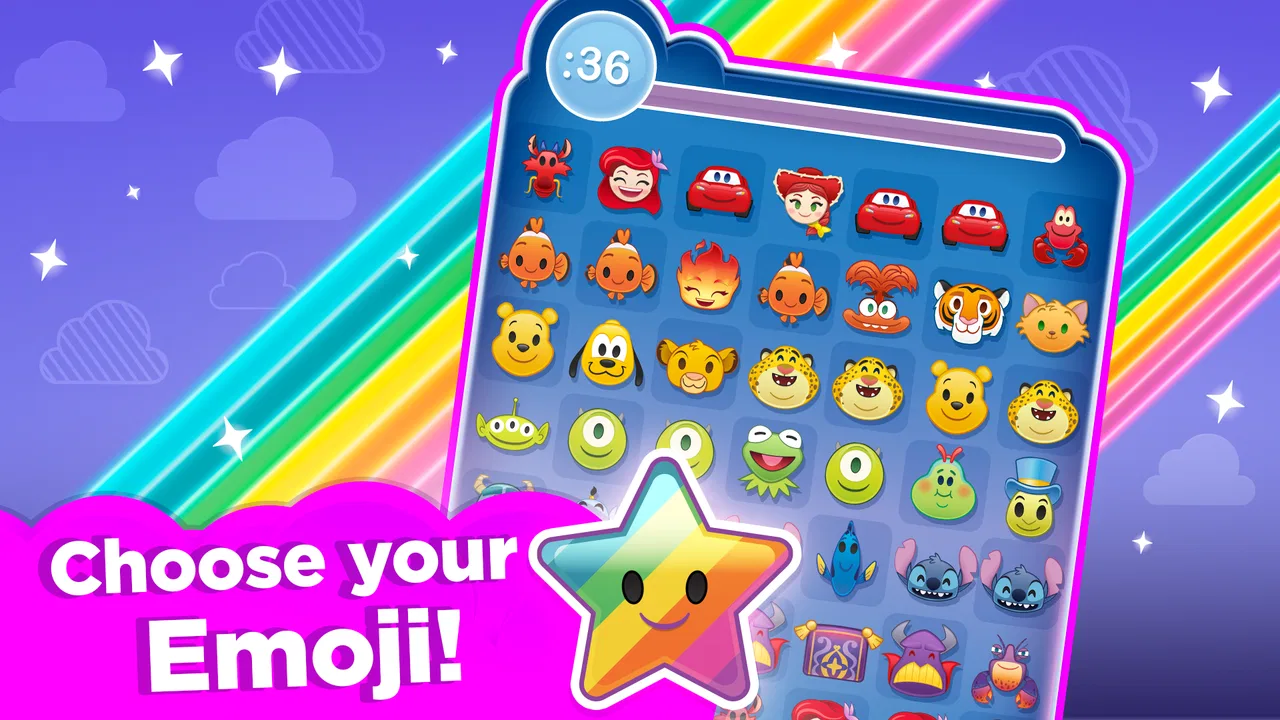
The first few minutes are designed to get you moving quickly. You see a board filled with Disney-themed emojis, then swap nearby pieces to form matches. Each successful match removes emojis and lets new ones fall into place. That falling movement is important because a simple action can create an extra match without another swap. I found that watching these cascades was more satisfying than simply tapping the first available group.
You May Also Like

 Blood Strike: 2.5 Anniversary
Blood Strike’s Loadouts Turn Every Drop Into a Tactical Gamble
A close look at Blood Strike’s custom loadouts: how fast access to signature weapons reshapes its battle royale rhythm, rewards preparation, and narrows the gap between fights.

 Pandora - Music & Podcasts
Pandora’s Music Is Easy to Start, but Harder to Recover
Pandora’s strength is its low-effort path from a seed to a station. Its weak spot is how much confidence it asks you to place in connection, setup, and quiet recovery.

 8 Ball Pool
 Is Built on Rivalries, Rematches, and Routine
A close look at the rivalries, rematches, shared routines, and unanswered safety questions that turn a quick pool match into a persistent mobile community.

 Samsung Music
’s Quiet Strength Is Playing What You Already Own
Its reach comes less from spectacle than from dependable access to a personal library. That simplicity is both the app’s strongest retention engine and its ceiling.

 AccuWeather: Weather Radar
AccuWeather Review: A Quick, Clear Forecast for Everyday Decisions
For everyday plans, the best forecast is the one you can understand quickly. AccuWeather makes rain timing, radar, and local conditions easy to act on, with a few trade-offs.

 Hill Climb Racing
Why Hill Climb Racing Still Turns Crashes Into One More Run
A tiny car, a bumpy hill and one more upgrade: Hill Climb Racing keeps resurfacing because its simple chaos makes every near-miss feel personal.
More From Our News Desk



The short rounds make the game easy to fit into everyday gaps. I would use it while waiting for an appointment or during a short break, rather than treating it like a long session that demands complete concentration. A round can still become more involved when the board starts producing combinations, but the basic interaction remains approachable. You do not need a separate explanation every time you return after a few days away.
The Disney identity is more than decoration. Different emojis make the board feel lively, and the recognizable characters give each collection a sense of personality. If you already enjoy Disney, Mickey, Lilo & Stitch, or Zootopia characters, that presentation will probably be the main reason the game feels more inviting than an anonymous jewel-matching puzzle. If you do not care about Disney characters, the visual appeal may fade sooner, because the underlying matching format is still familiar.
One thing I would set expectations about is the pace. The game is free, but it includes optional purchases ranging from $0.99 to $199.99 per item. I did not need to spend money to understand the basic play, yet the presence of purchases means you should decide early how you want to handle them. For a child’s device, I would check the device’s purchase controls before handing it over, even though the content rating is Everyone.
The current version is 74.2.1 and requires Android 7.0 or later. Those details matter if you are installing it on an older phone or tablet. On a compatible device, the game is best approached as a casual puzzle with collectible character appeal, not as a deep strategy title that replaces a traditional board game or a large role-playing adventure.
The first setup is simple, but your expectations matter
After installing, I recommend starting with the tutorial rather than rushing through it. The early instructions explain the basic matching rhythm, and that is also the safest place to notice how the game communicates goals and special actions. I tend to skip tutorials in simple puzzle games, but here the small details affect how efficiently you use the board later.
Before playing seriously, I would also spend a moment looking at the game’s sound and notification behavior on your device. Puzzle games are often opened in quiet public places, and the bright presentation can make it easy to forget that the experience may be more noticeable than a plain grid puzzle. Adjusting the phone before a session is less distracting than trying to change everything in the middle of a round.
The first meaningful choice is not which emoji looks nicest. It is deciding whether you want to play for quick progress or for careful board control. Matching whatever is closest gives immediate movement, but it can remove useful positions before you have considered the next fall. I had better rounds when I scanned from the bottom upward, checking which move would leave the board in a more useful shape.
That scanning habit is one of the first non-obvious improvements. In many match-three games, players focus on the largest visible group. In Disney Emoji Blitz, a smaller match can be better if it opens space beneath a special piece or allows two future matches to line up. I would not calculate every move like a chess problem, but I would pause for one second before swapping. That small pause makes the game feel less random and helps a new player understand why one round succeeds while another stalls.
How to reach the first satisfying success
Your first success should be more than clearing a single group. Try to create a chain in which one match causes another group to fall into place. To do that, look for matches near the lower part of the board, because removing pieces there gives the upper emojis more room to move. The result is not guaranteed, but the approach teaches the board’s rhythm faster than making only the most obvious top-row move.
When a special effect becomes available, do not automatically activate it the instant you see it. I found it more useful to consider what the board will look like after the effect. If using it clears a crowded area or creates space for a follow-up match, it can be worth saving for a moment. If the board is about to become difficult to read, using it immediately may be the sensible choice. The right decision depends on the current layout, not on a fixed rule that works every time.
A practical routine for a first-time player is to make one ordinary match, watch the emojis settle, then search for a second move that uses the new arrangement. This avoids the common mistake of planning around a board that is about to change. The game rewards attention to what falls next, and that is where it differs from a purely reflex-based puzzle.
I also recommend treating the round’s objective as more important than your personal preference for a particular character. A visually attractive match may not help you complete what the round asks for. Once you understand that, the board becomes a small decision-making exercise: clear what is useful, create opportunities, and use character abilities with a purpose.
For an everyday example, imagine you have five minutes before a bus arrives. I would start one short round, focus on building a chain rather than chasing a perfect board, and stop after the result screen instead of beginning another round automatically. That keeps the game in its strongest use case: a compact distraction with enough decision-making to feel active, but not so much commitment that you need a long uninterrupted session.
Where new players commonly get confused
The biggest source of confusion is assuming that every match has the same value. A larger group is usually attractive, but the position of the match can matter more than its size. Clearing a group that sits in a useful central area may produce a better cascade than clearing a slightly larger group at the edge. I learned to judge the board by what the move unlocks, not only by how many emojis disappear immediately.
Another confusing point is the difference between collecting characters and playing them effectively. The character theme encourages you to think about which emoji you like most, but the active board still determines the best move. A favorite character may not be the most useful option in every situation. New players who expect a simple “choose the strongest character” system may find the game less straightforward than it first appears.
It is also easy to spend a useful ability too early because the animation feels rewarding. My advice is to ask one question before activating it: will this action improve the board, or am I using it simply because it is available? If the answer is only the second one, wait when the board is stable. If the board is blocked or the round is nearing its end, immediate use can be perfectly reasonable.
The free-to-play structure can create another kind of uncertainty. A player may wonder whether progress requires purchases. My experience is that the basic puzzle loop can be learned and enjoyed without paying, but optional purchases can make the wider progression feel more tempting. That makes the game a better fit for someone comfortable with a free game that presents spending opportunities, rather than someone who wants a completely purchase-free experience.
There is also a difference between a short-term goal and long-term satisfaction. Completing a round feels clear and manageable, while maintaining interest over many sessions depends on whether you enjoy the character-collection side and the gradual improvement of your matching decisions. If you only want a fixed set of handcrafted puzzles with no ongoing pull, a traditional offline puzzle app may suit you better.
Small techniques that make the board easier to read
I found three habits particularly useful. First, inspect the lower half of the board before making a move. Matches there often influence more pieces, while a top-area match can leave the lower structure unchanged. Second, after every cascade, stop looking at the move you intended to make and scan the new board from the beginning. The board has changed, so your original plan is no longer reliable.
Third, avoid creating a special effect in a position that you cannot realistically use. A powerful-looking piece is less helpful if it sits where it will not connect with the rest of your plan. Sometimes the best move is to make an ordinary match that opens a route toward it. This is a small but important trade-off: immediate visual excitement versus a better setup for the next several seconds.
These techniques also explain why the game can feel different from basic match-three alternatives. A very simple alternative may let you clear pieces with almost no planning, which is ideal when you want to switch off completely. Disney Emoji Blitz asks for a little more awareness because the character abilities, falling pieces, and round objectives interact. It remains casual, but it is not entirely mindless.
Compared with a slower puzzle game built around fixed levels, this one feels more spontaneous. You respond to the board in front of you instead of following a carefully arranged solution. That creates satisfying surprises, but it also means a poor cascade can feel less under your control. Players who dislike chance or changing layouts may prefer a logic puzzle where every step has a single deliberate answer.
Compared with a plain match-three game, the Disney presentation gives it a stronger reason to return. The characters make short sessions feel more personal, while the familiar controls keep the learning curve low. The trade-off is that the Disney theme carries much of the emotional appeal. Someone looking for minimalist visuals, quiet concentration, or a serious competitive puzzle may find the style too busy.
Who should play it, and who should choose something else
I would recommend it to Disney fans, casual players, and anyone who likes puzzle rounds that can be completed in small pieces of free time. It is also a reasonable choice for a first puzzle game because the basic action is easy to grasp, yet there is enough room to improve through better positioning and timing. The Everyone rating makes its audience broad, although adults should still make sensible purchase settings on shared devices.
I would be more cautious about recommending it to someone who wants a fully offline-feeling puzzle experience with no ongoing purchase pressure. I would also point heavy puzzle enthusiasts toward a more demanding alternative if they want deep planning, strict level design, or a system where skill completely determines the outcome. This game’s appeal comes from the combination of quick matching, recognizable characters, and changing board situations.
It is not the best choice when you need a calm, nearly invisible activity during a meeting or a quiet waiting room. The colorful effects and character-focused presentation are part of its charm, but they can feel more attention-grabbing than a subdued number puzzle. On the other hand, that same energy works well when a plain grid would feel dull.
If you are unsure about spending, begin with a firm personal rule: play the free loop first and decide whether the game is enjoyable without buying anything. Do not treat a purchase as a solution to a frustrating board until you understand the normal rhythm of play. This approach keeps the decision practical and helps separate genuine enjoyment from the impulse to overcome a temporary setback.
What to do after the first few rounds
Once the basic matching feels comfortable, focus on consistency rather than chasing spectacular cascades. Try to notice which moves leave the board open and which ones create clutter. This is where the game becomes more rewarding for me: improvement comes from reading the layout faster, not from memorizing a complicated control scheme.
I would also vary your play style. In one round, prioritize safe matches that keep the board moving. In another, wait for a better setup and see whether a special ability can produce a larger chain. Comparing those approaches teaches you more than repeating the same quick swap every time. It also helps you discover whether you enjoy the game’s light strategy or only its visual theme.
Keep sessions short if the game starts to feel repetitive. Its strength is accessibility, and forcing a long session can expose the limits of a compact puzzle loop. I prefer returning later with a clear head, especially because a short break makes it easier to see potential matches that I was overlooking.
For families, I would explain the board before handing over the device: match nearby emojis, watch what falls, and do not assume every special action should be used immediately. That simple guidance gives a new player a meaningful first win without turning the game into a lesson. It also creates a useful boundary around optional spending, which is worth discussing separately.
Jam City, Inc. has built the game around a very approachable idea, and the result works best when you accept its intended scale. It is not trying to replace a long adventure or a serious strategy title. It is a colorful puzzle companion for short breaks, with enough character-specific flavor to make familiar matching feel fresh.
My final view is positive, with a clear condition: Disney Emoji Blitz is strongest when you want a quick, character-driven puzzle and are comfortable with optional purchases in a free game. The first successful chain arrives quickly, the controls are welcoming, and careful board reading gives the game more depth than its simple opening suggests. Just keep your expectations realistic, use special abilities thoughtfully, and choose another puzzle style if you want a completely quiet, fixed, or purchase-free experience.
FAQs for Disney Emoji Blitz Game
01What is Disney Emoji Blitz, and how does it work?
Disney Emoji Blitz is a fast-paced match-3 puzzle game featuring beloved Disney, Pixar, and Star Wars characters. Players match emojis to score points and complete missions. Each character has unique power-ups, making gameplay exciting and diverse. As you progress, you collect emojis, which can also be used in your device's keyboard.
02Is Disney Emoji Blitz free to play?
Yes, Disney Emoji Blitz is free to download and play. However, it offers in-app purchases for items like power-ups and extra lives. While these purchases can enhance gameplay, they are optional, and the game can be enjoyed without spending money. It's important to monitor purchases if children are playing.
03What are the system requirements for Disney Emoji Blitz?
Disney Emoji Blitz is available for both Android and iOS devices. For iOS, it requires iOS 10.0 or later, and for Android, it typically requires version 4.4 and up. Ensure your device meets these requirements for optimal performance and a smooth gaming experience.
04How do I collect new emojis in Disney Emoji Blitz?
New emojis are collected by completing missions and events, or by opening emoji boxes with coins earned in-game. Each emoji has different abilities that can help you in various levels. Participating in special events can also unlock limited-edition emojis, adding to your collection.
05Can I play Disney Emoji Blitz with friends?
Yes, Disney Emoji Blitz allows you to connect with friends through Facebook. This enables you to compete for high scores on leaderboards, send and receive hearts (lives), and share your progress. Playing with friends can enhance the competitive aspect of the game and provide additional fun.
Pros
- Fun and engaging gameplay with Disney characters.
- Regular updates with new emojis and events.
- Easy to learn and suitable for all ages.
- Visually appealing with vibrant graphics.
- Connects to Disney account for rewards.
Cons
- In-app purchases can be expensive.
- Requires internet connection to play.
- Limited lives can interrupt gameplay.
- Some events feel repetitive over time.
- Can be overwhelming for new players.

Disney Emoji Blitz Game
Gallery